
Do you ever write “adverse” and wonder if it should be “averse”? You are not alone! These two sound almost the same and both have a negative feeling — but they describe completely different things. One is about bad conditions, the other is about personal dislike. Today, we will clear it up once and for all with a simple rule and easy examples you can actually remember.
What Is the Simple Difference?
Here is the short answer you can use almost every time:
- Adverse = harmful or unfavorable conditions (weather, effects, circumstances).
- Averse = having a strong dislike (a person’s feeling — “I am averse to…”).
Think of it this way: adverse describes the world (bad conditions), averse describes you (your dislike).
Adverse: Bad Conditions
Use adverse for unfavorable conditions or effects — things outside a person.
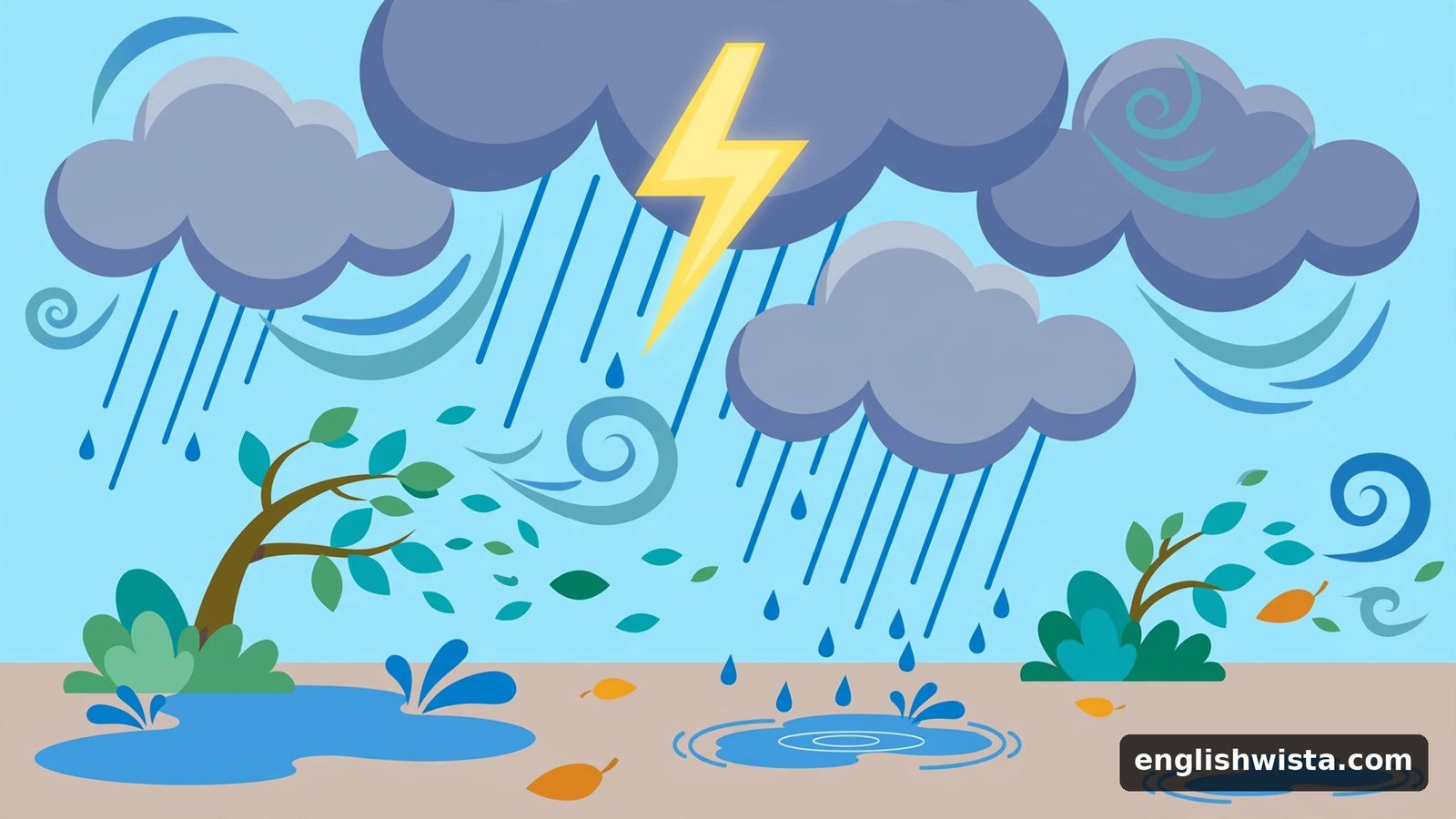
- The flight was delayed due to adverse weather. (Bad conditions.)
- The medicine had no adverse effects. (No harmful effects.)
- Adverse market conditions hurt the business. (Unfavorable circumstances.)
- He had an adverse reaction to the food. (A harmful reaction.)
If it is about conditions, effects, or circumstances being bad, it is adverse.
Averse: Personal Dislike
Use averse for a person’s strong dislike of something. It almost always follows the pattern “averse to.”
- She is averse to taking risks. (She dislikes risk.)
- He is not averse to hard work. (He doesn’t mind it.)
- They are averse to change. (They dislike change.)
- I am averse to waking up early. (I hate it!)
If a person dislikes something, they are averse to it.
The Easy Trick to Remember
Here is a trick that never fails. Check what the word describes:
- Adverse → adversity (hardship, bad conditions). Describes things.
- Averse → “a person is averse.” Describes feelings.
Or even simpler — look for the pattern:
- “averse to” = a person disliking something. (If you see “to” after it, it’s averse!)
- “adverse + noun” = bad conditions. (adverse weather, adverse effects.)
Person + “to” = averse. Bad conditions = adverse. That is the whole secret!
Adverse vs Averse in Example Sentences
Let us look at real-life pairs side by side:
- Adverse weather canceled the match. / She is averse to playing in the rain.
- The drug’s adverse effects were mild. / He is averse to taking medicine.
- Adverse conditions slowed the project. / The team was averse to delays.
In each pair, adverse = bad conditions and averse = personal dislike.
Common Mistakes to Avoid
Mistake 1: “Adverse to” for dislike.
- Wrong: “She is adverse to spicy food.”
- Right: “She is averse to spicy food.” (Dislike = averse!)
Mistake 2: “Averse” for bad effects.
- Wrong: “The averse effects of smoking are well known.”
- Right: “The adverse effects of smoking are well known.” (Harmful effects = adverse!)
Mistake 3: Forgetting “risk-averse.” The common term is “risk-averse” (disliking risk) — never “risk-adverse.” Remember: a person’s attitude → averse.
Frequently Asked Questions
What does “adverse possession” mean? A legal term for occupying someone else’s property long enough to claim it. It uses adverse (unfavorable to the owner) — not personal dislike.
Is “averse” always followed by “to”? Almost always in modern English: “averse to risk.” You will rarely see it any other way, which makes it easy to spot.
Can things be “averse”? No — only people (or groups of people) are averse. Things and conditions are adverse. That split is the whole key.
What about “adversary”? An adversary is an opponent — it shares the “advers-” root with adverse (unfavorable), not with averse.

Mini Quiz: Test Yourself
Choose adverse or averse for each sentence.
- 1. The match was postponed due to _____ weather.
- 2. She is _____ to public speaking.
- 3. The treatment had no _____ side effects.
- 4. He is not _____ to trying new foods.
- 5. Investors are _____ to high-risk stocks.
Answers: 1. adverse (bad conditions) 2. averse (dislike) 3. adverse (harmful effects) 4. averse (doesn’t dislike) 5. averse (investors dislike them — “risk-averse”)

Quick Recap
- Adverse = bad conditions or harmful effects (adverse weather, adverse effects).
- Averse = personal dislike, almost always “averse to” (averse to risk).
- The trick: only people are averse; conditions are adverse.
- Remember “risk-averse” — never “risk-adverse.”
- Adversary (opponent) belongs to the adverse family.
Conclusion
So, adverse or averse? Now you know: adverse is for bad conditions in the world, and averse is for dislike in a person. With the person-vs-conditions trick in your pocket, you will never mix them up again. Keep practicing with real sentences, and soon the right word will come to you automatically!