Meet and meat sound exactly the same, but you would not want to invite someone for dinner and serve them a handshake! Meet means to see or get to know someone, while meat is animal food like beef or chicken. This simple guide explains the difference with easy examples, a memory trick, common mistakes, and a mini quiz.
What Is the Simple Difference?
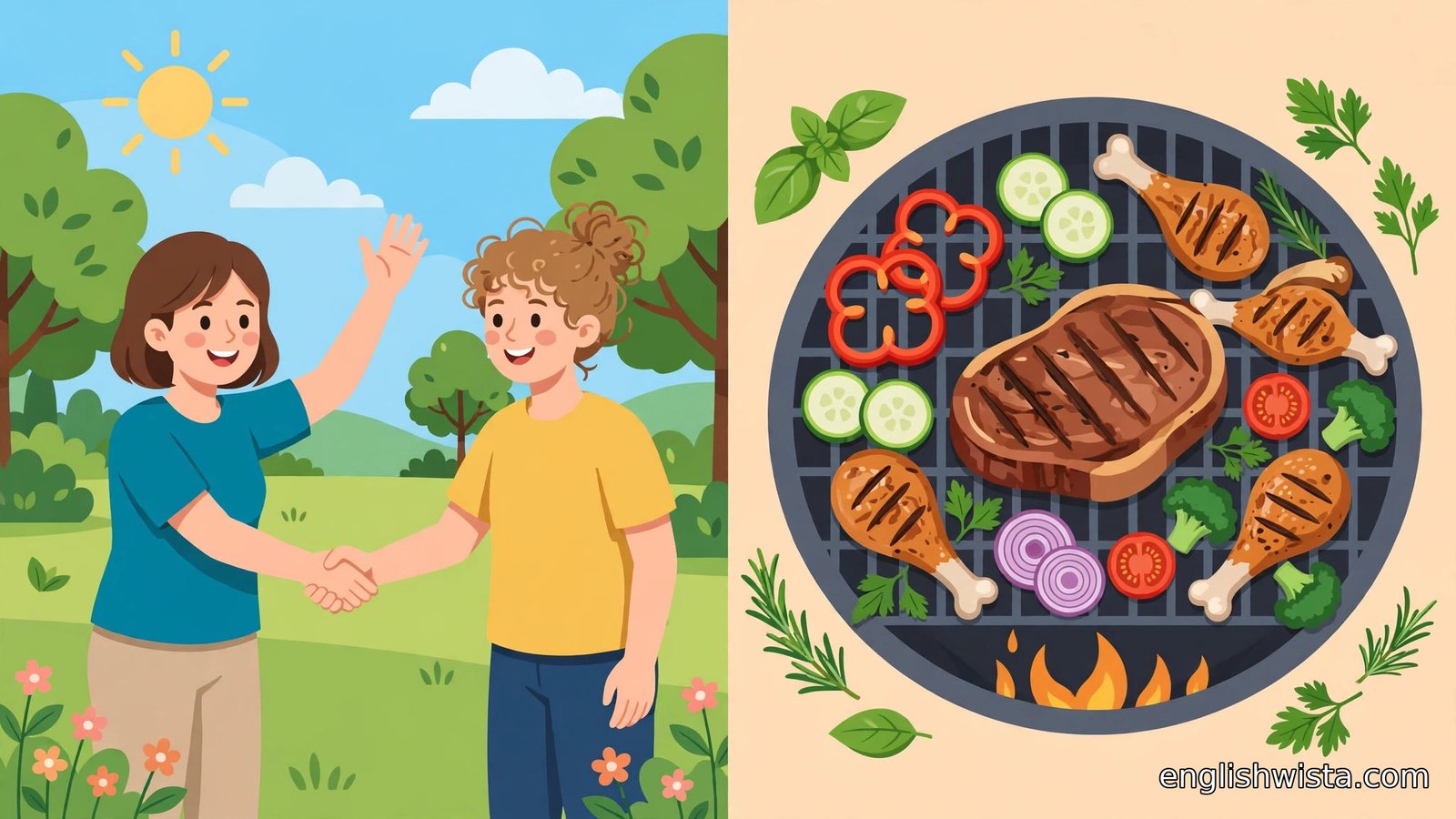
The simple difference is this: meet means to see someone for the first time or to come together with someone; meat is food that comes from animals, such as beef, chicken, or lamb. So you meet your new neighbor, and you eat meat for dinner. Remember: meet is about people, meat is about food.
Meet: The People Word
Meet means to see, greet, or get to know someone — or for people to come together at a place and time. It is always about people coming together.
- I am happy to meet you at last.
- We will meet at the park at five o’clock.
- She met her best friend on the first day of school.
Meat: The Food Word
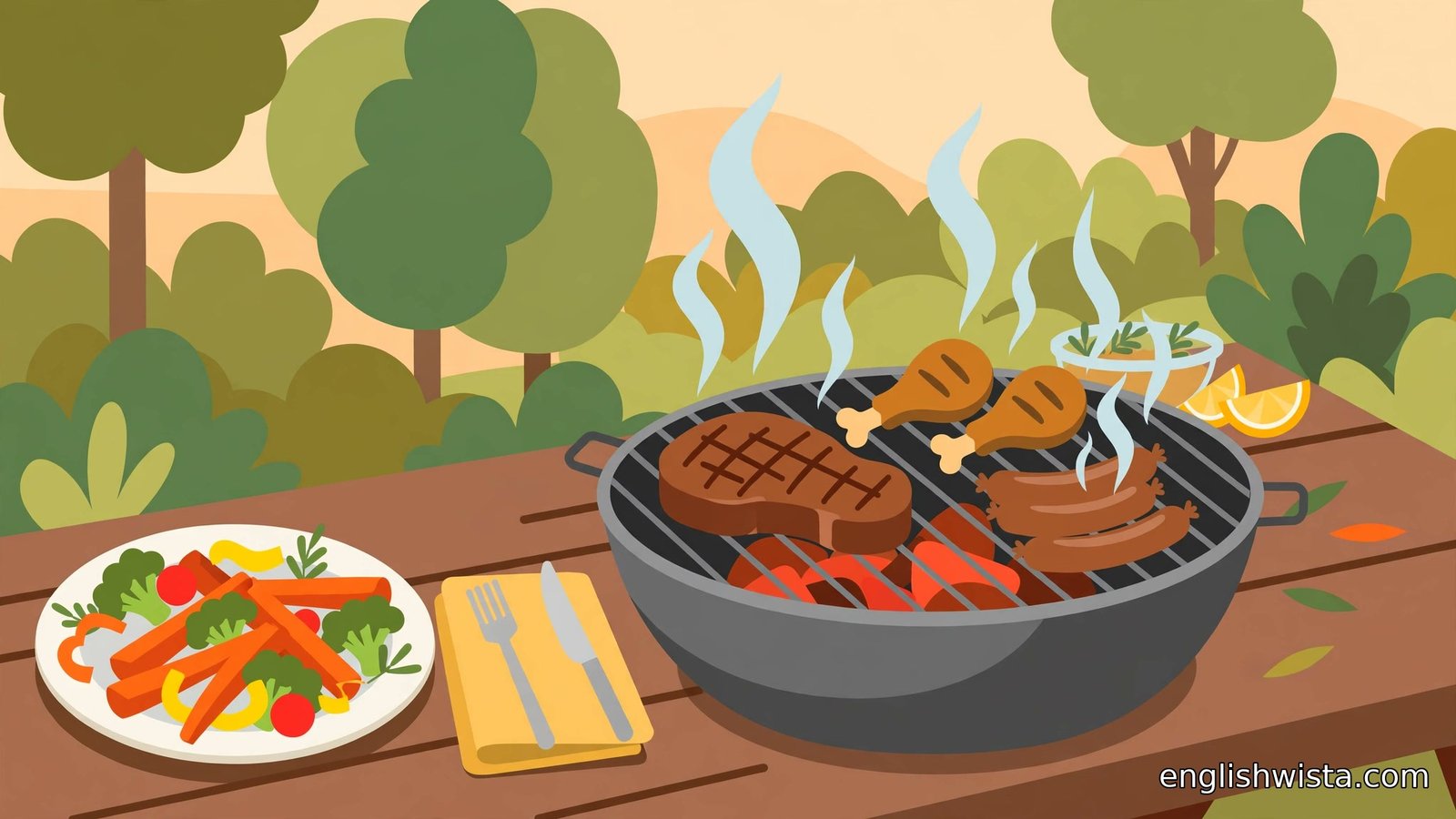
Meat is food made from the flesh of animals — beef, chicken, pork, and lamb are all kinds of meat. Many people eat it grilled, fried, or roasted.
- We had grilled meat and vegetables for dinner.
- The butcher sells fresh meat every morning.
- She does not eat meat — she is a vegetarian.
The Easy Trick to Remember
- Meet has “ee” — like “eeveryone”! You meet people, and people say “ee” sounds when they greet you.
- Meat has “ea” — like “eat”! You eat meat, and both words share “ea”.
- Think: you meet a person, but you eat meat.
- If it is on your plate, it is meat; if it is a person, it is meet.
Example Pairs
- I will meet my teacher after class. / The restaurant serves fresh grilled meat.
- It was nice to meet your brother. / Chicken meat is softer than beef.
- They met at a wedding last year. / The dog waited under the table for a piece of meat.
Common Mistakes to Avoid
Wrong: I was happy to meat you.
Right: I was happy to meet you.
Wrong: We had grilled meet for dinner.
Right: We had grilled meat for dinner.
Wrong: She does not eat meet.
Right: She does not eat meat.
Frequently Asked Questions
Are “meet” and “meat” pronounced the same? Yes. Both are pronounced like “meet”, so only spelling and context reveal the meaning.
Can “meet” be a noun? Yes, in sports. A “swim meet” or “track meet” is a competition or gathering — for example, “the athletics meet starts on Friday”.
Is fish a kind of “meat”? Technically yes, but in everyday English, people usually say “fish” separately from “meat”. Many vegetarians who avoid meat still eat fish.

Mini Quiz: Test Yourself
- 1. I am looking forward to ___ your parents.
- 2. The barbecue smelled of grilled ___.
- 3. Let us ___ at the cinema at seven.
- 4. The ___ in this stew is very tender.
- 5. She ___ her husband at a music festival.
Answers: 1. meet, 2. meat, 3. meet, 4. meat, 5. meet.
Quick Recap
- Meet = to see, greet, or get to know someone.
- Meat = animal food like beef, chicken, or lamb.
- Both are pronounced “meet” — only the spelling is different.
- Memory clue: you eat meat — both have “ea”.
Conclusion
Now you will never mix them up: you meet people and you eat meat. Keep the “ea = eat” trick in mind, and these twin-sounding words will be easy to use correctly every time.